
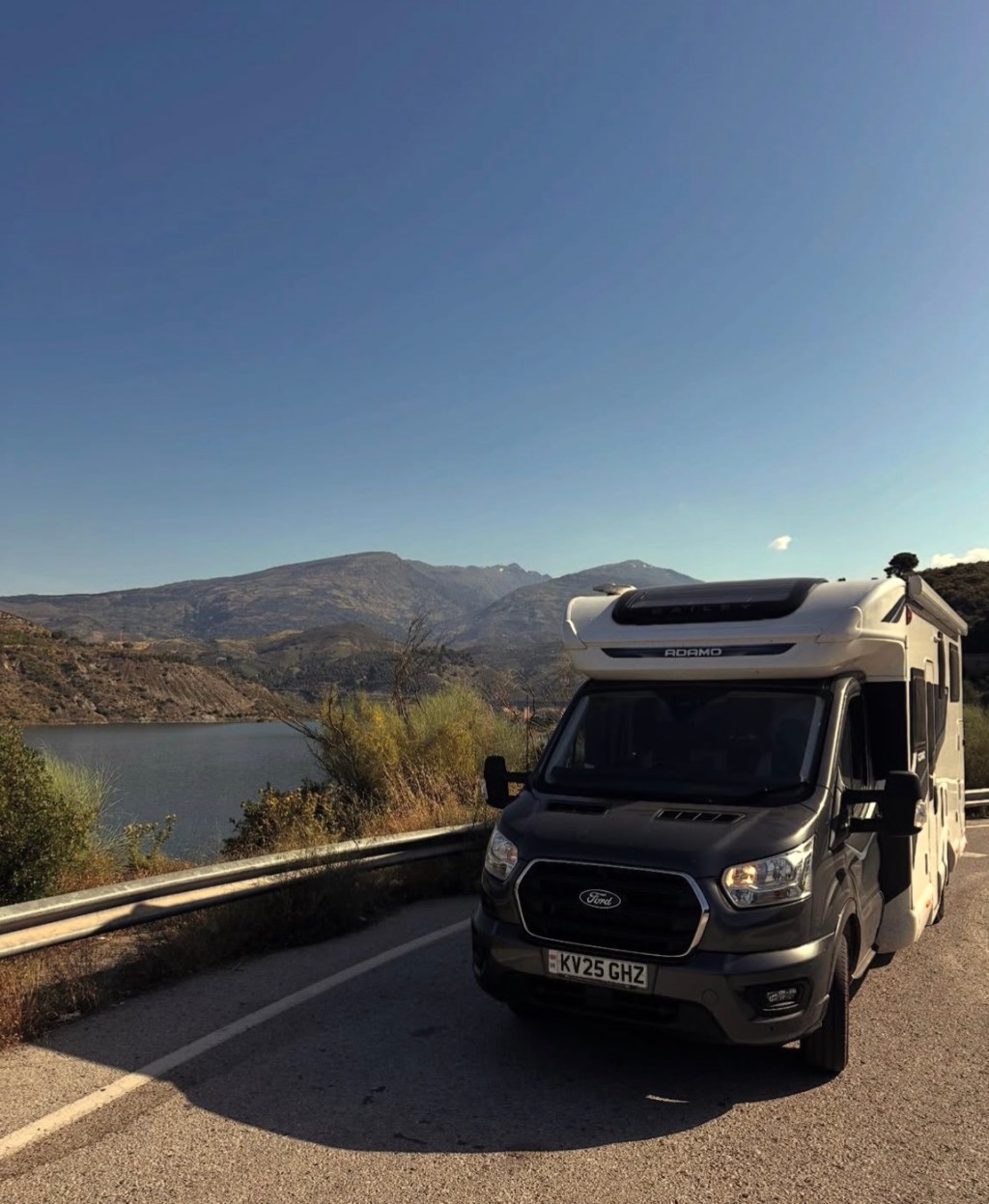
After driving across the border from France into Spain, down towards Canet de Mar, we had sea views that were magnífica!
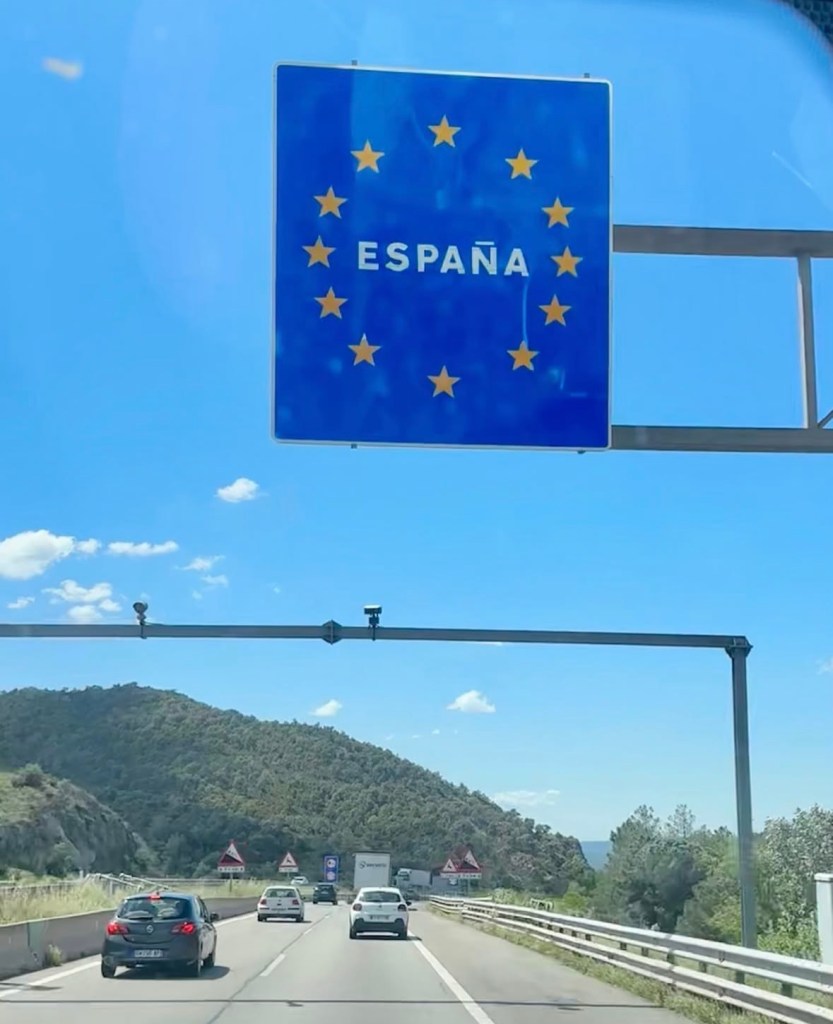
Is Spain Motorhome Friendly?
Spain is made for road trips. Its extensive, well-maintained road network links dramatic coastlines, rugged mountains, and vibrant cities with ease, making long-distance motorhome travel feel effortless rather than exhausting. One day you’re hugging the Mediterranean, the next you’re climbing into the hills – often on quiet, scenic roads that seem designed for wandering.
Under Spain’s national traffic regulations, a motorhome is treated like any other vehicle. You’re legally allowed to park wherever standard vehicles can park, and yes, you can sleep inside your motorhome while parked, as long as you stick to normal parking rules and don’t spill out into full “camping mode” with tables, chairs, or awnings.
Much like the aires in France, Spain has its own version: Áreas de Autocaravanas. These are dedicated motorhome stopovers offering services such as fresh water, waste disposal, and sometimes electricity. Prices range from completely free to around €20 per night. Unlike France, where aires are often dotted along motorways, in Spain they’re more commonly found near major cities like Sevilla and Mérida, as well as coastal hotspots such as Cabo de Gata, alongside plenty of rural and scenic locations.
That said, as I mentioned in my “I ❤️ France in a Motorhome” blog, my husband and I tend to favour the comforts of a campsite – electric hook-up, fresh water, proper toilet and shower facilities, and well-maintained service points. After all, a little luxury goes a long way on a long trip.
Our Route & Stops
Our Spanish adventure began on the coast at Canet de Mar, just north of Barcelona. Late May sunshine, long cycle rides along the beachfront, and that unmistakable Mediterranean calm set the tone perfectly.
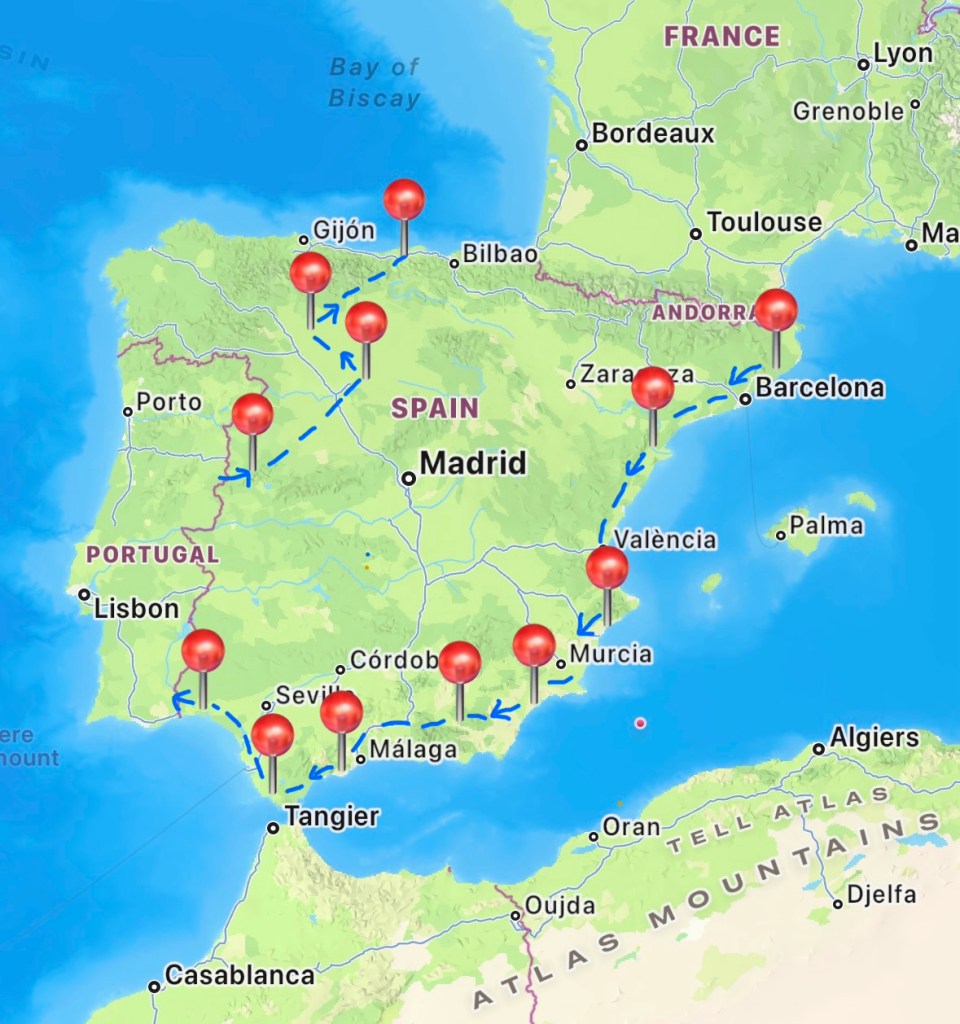
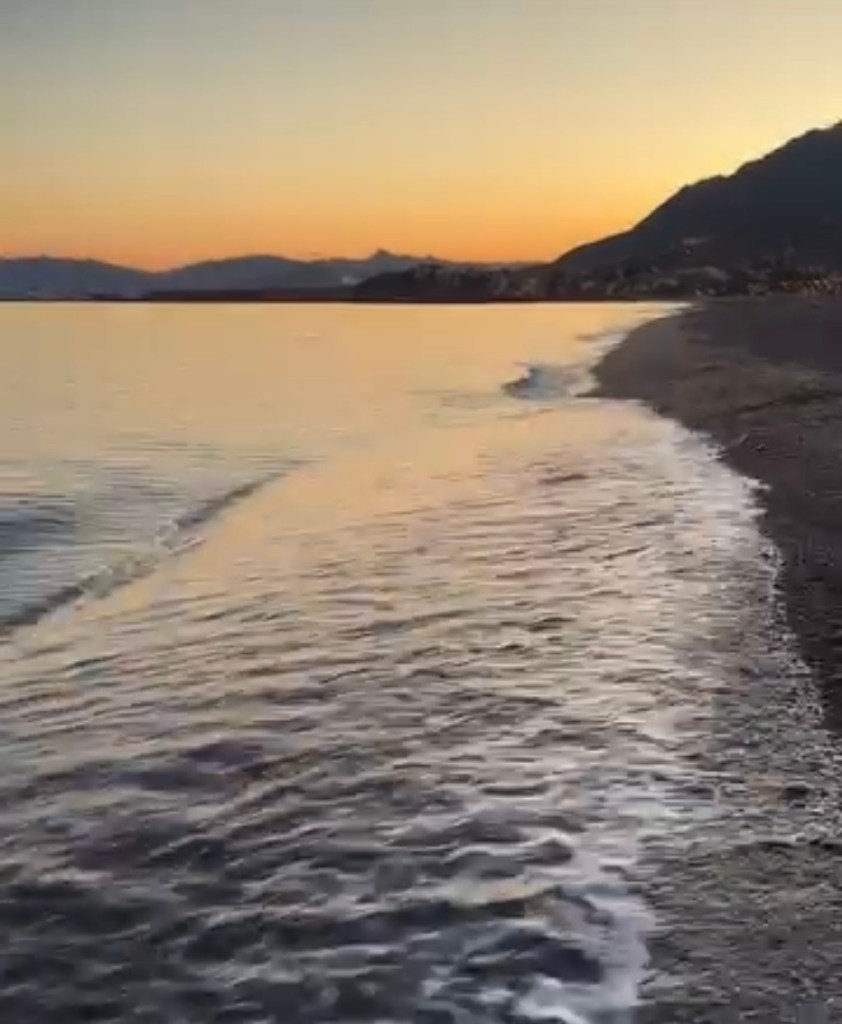
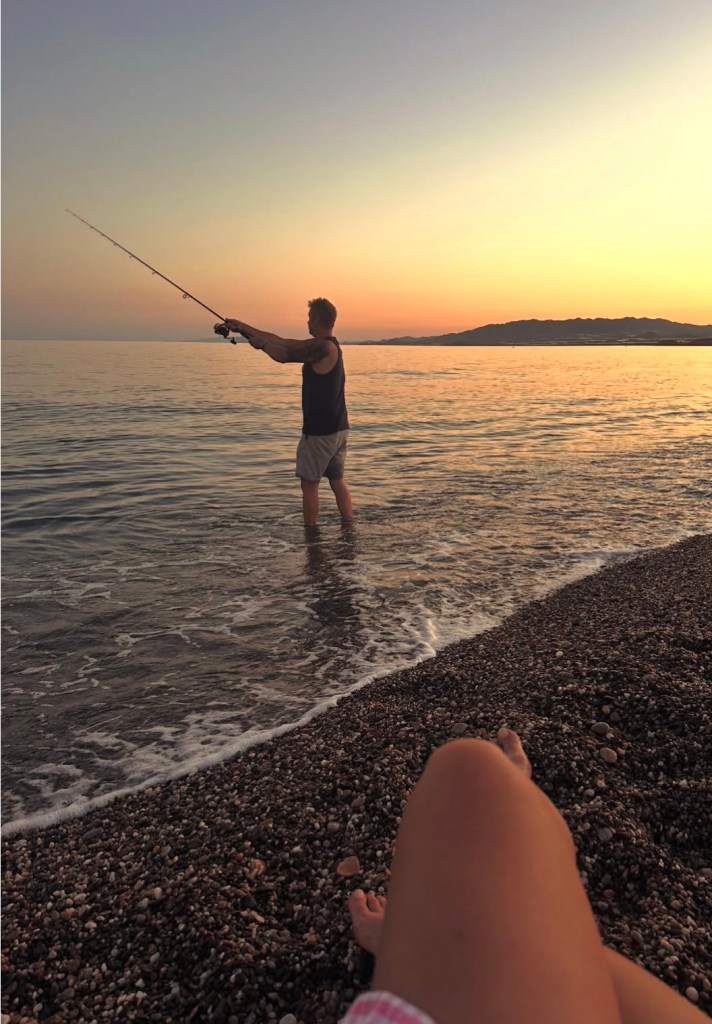
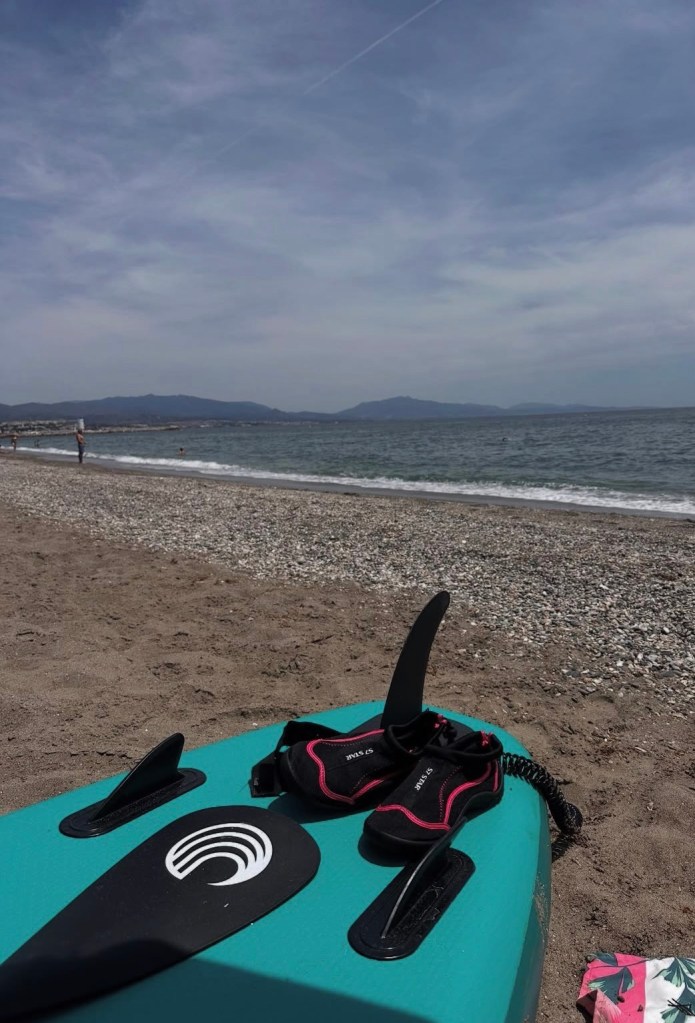
From there, we followed the coast south to Benicàssim, soaking up more beach time and indulging in fresh seafood, before continuing on to Mazarrón. Its dark, pebbly beaches and spectacular sunsets quickly became a favourite – made even better with a bit of fishing as the day slipped into evening.
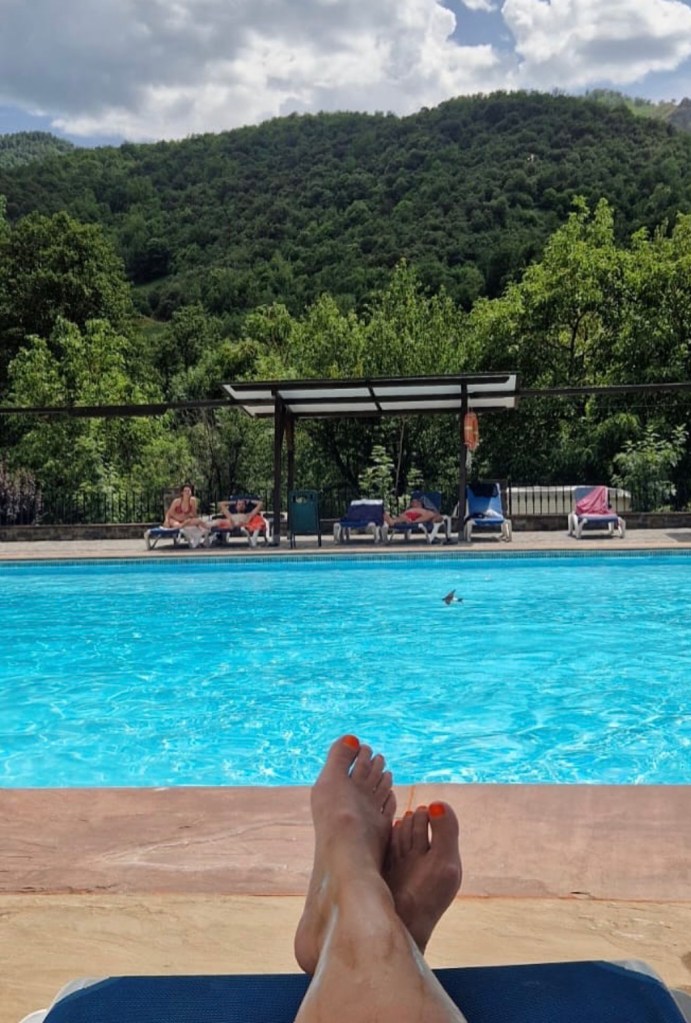
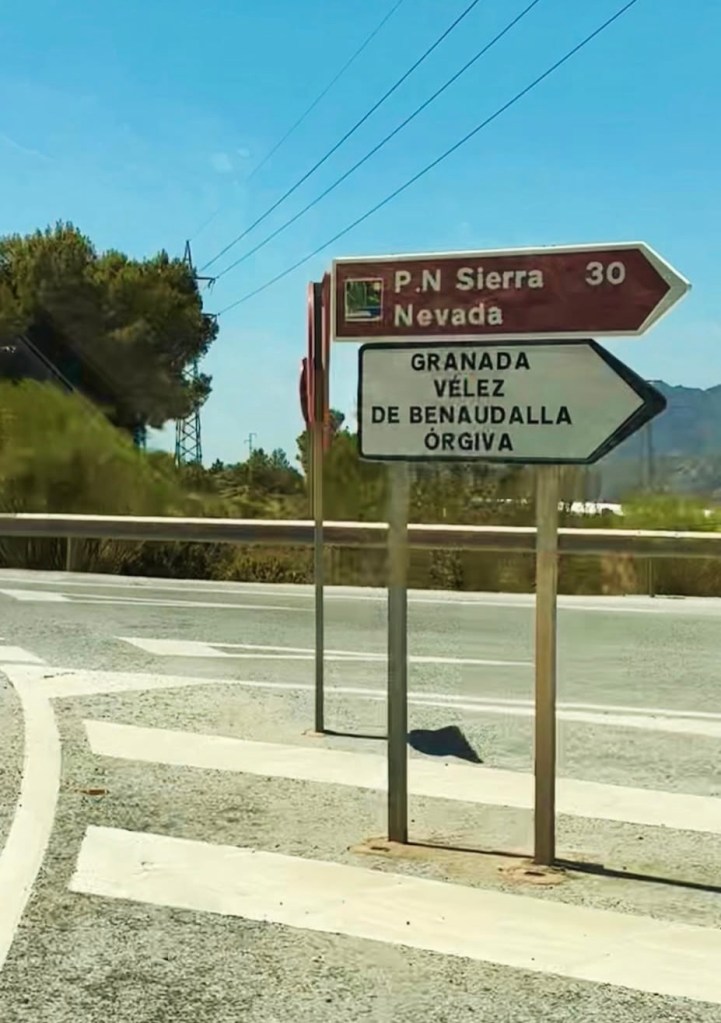
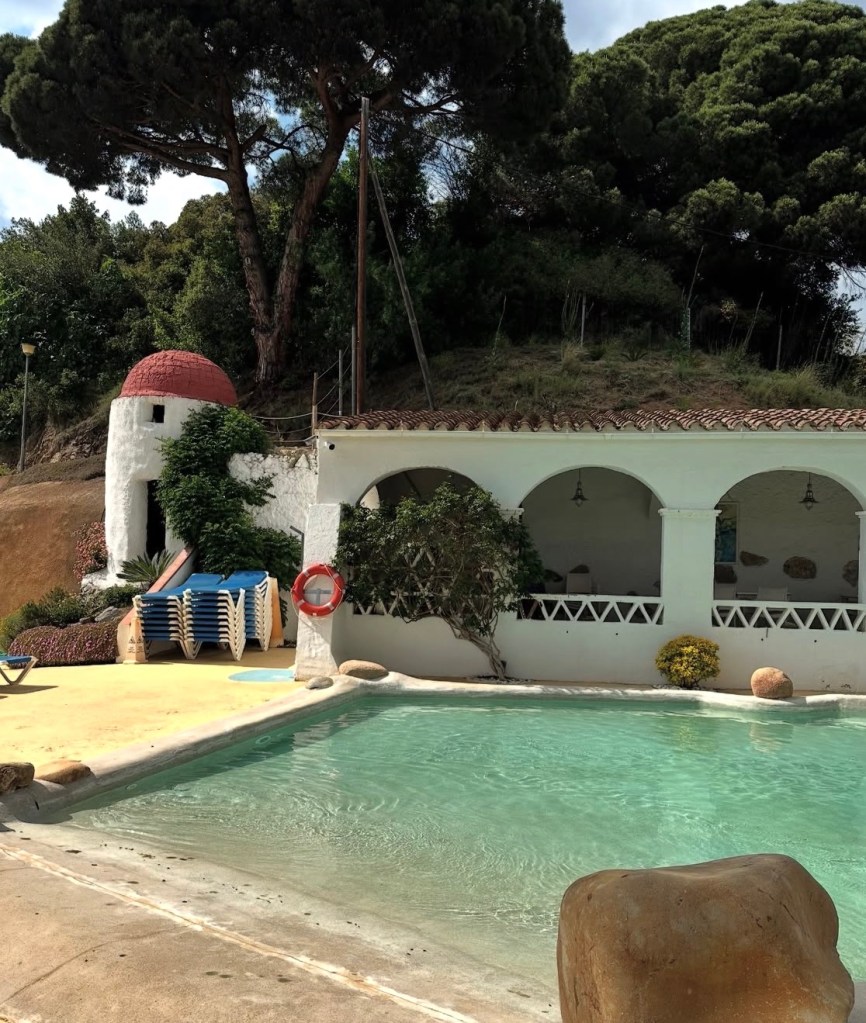
Craving a change of scenery, we headed inland to Órgiva, a mountain town just south of the Sierra Nevada National Park. It was extremely hot, so the cool campsite pool felt less like a luxury and more like survival.
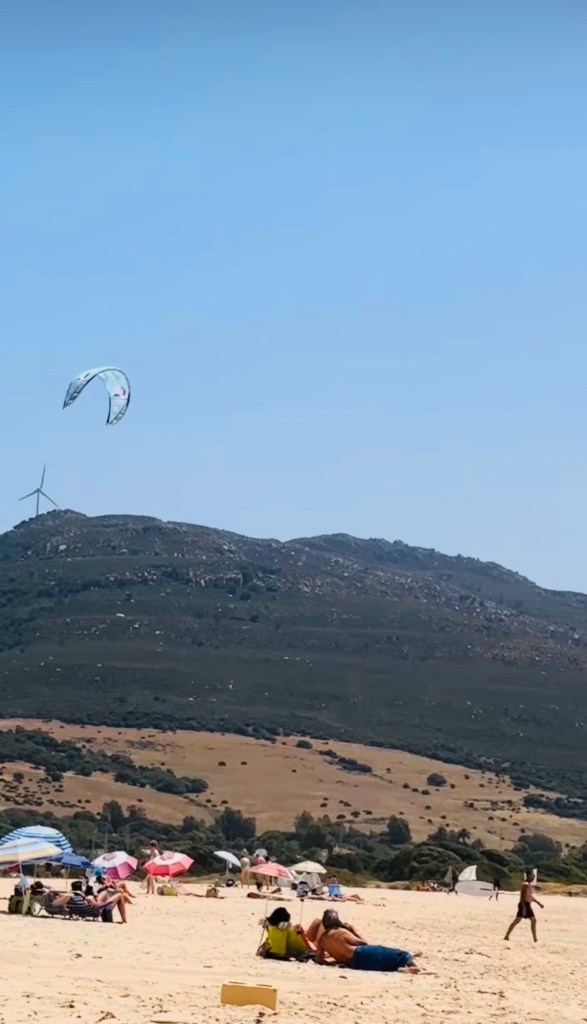
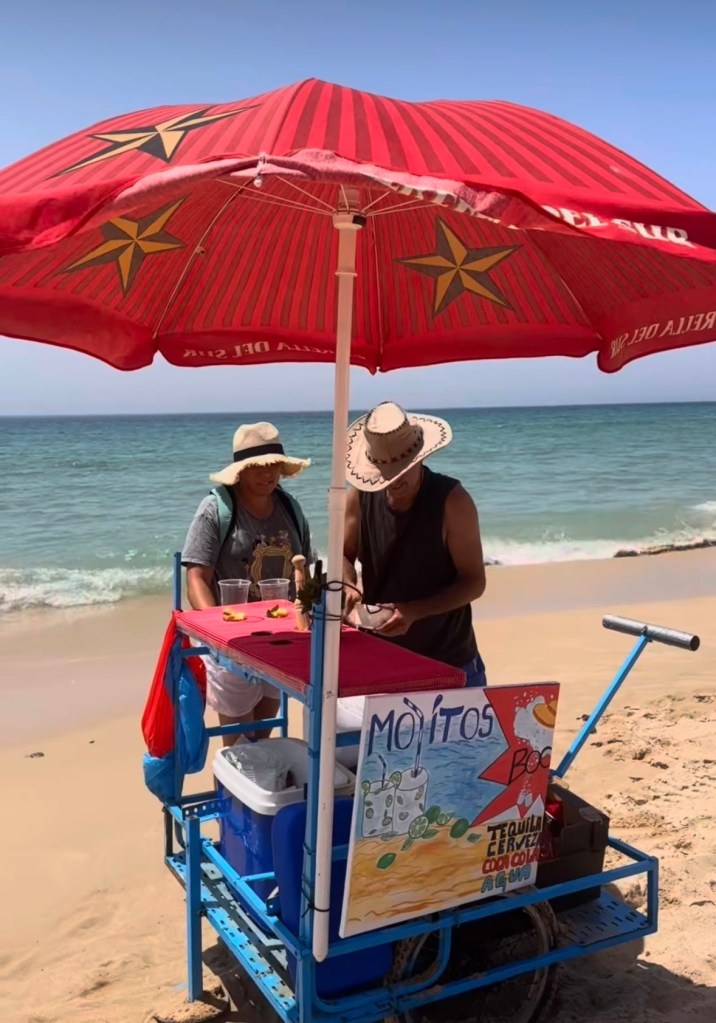
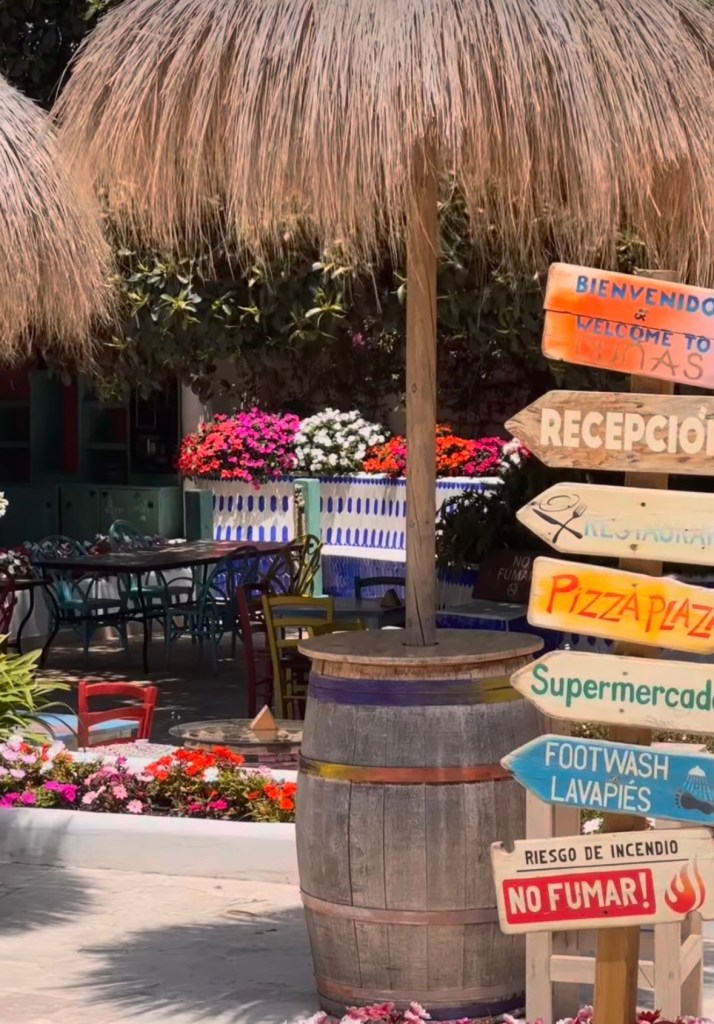
Back on the coast, we arrived in Tarifa, where strong winds delighted kitesurfers and brought some much-needed relief from the heat. Mojitos were very welcome here too. Huelva marked our final Spanish stop – a fitting end to a magical, beach-filled motorhome journey before crossing into Portugal… but that’s a story for another blog.
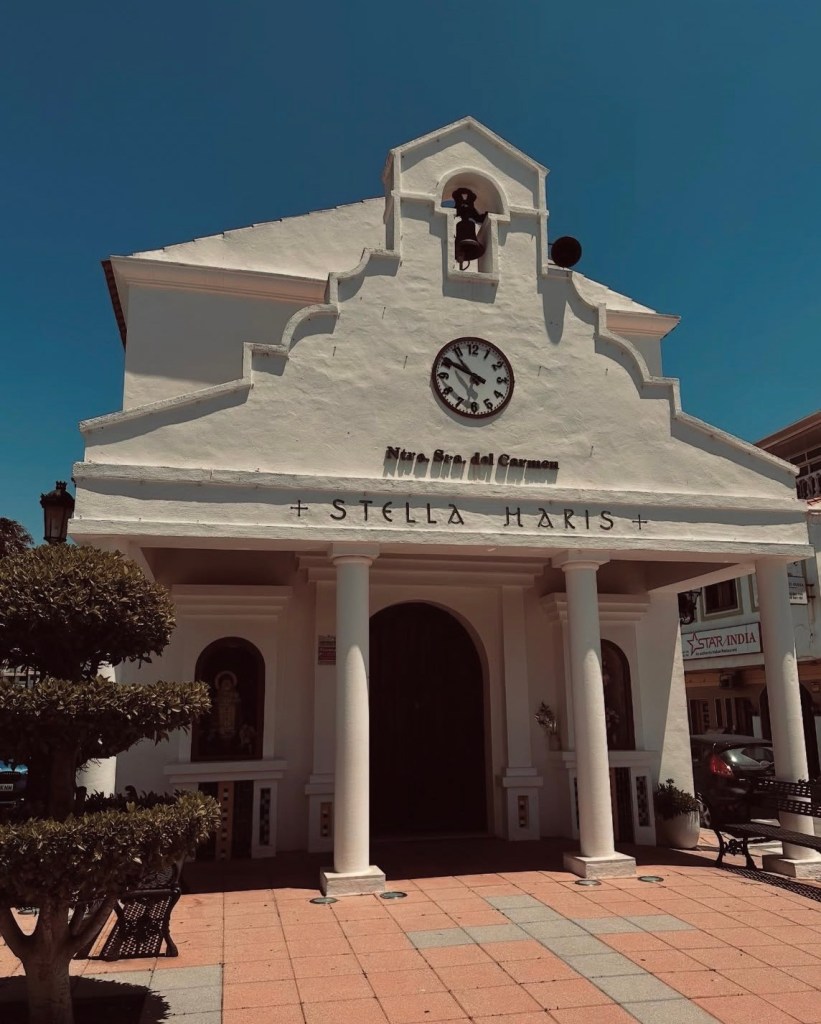
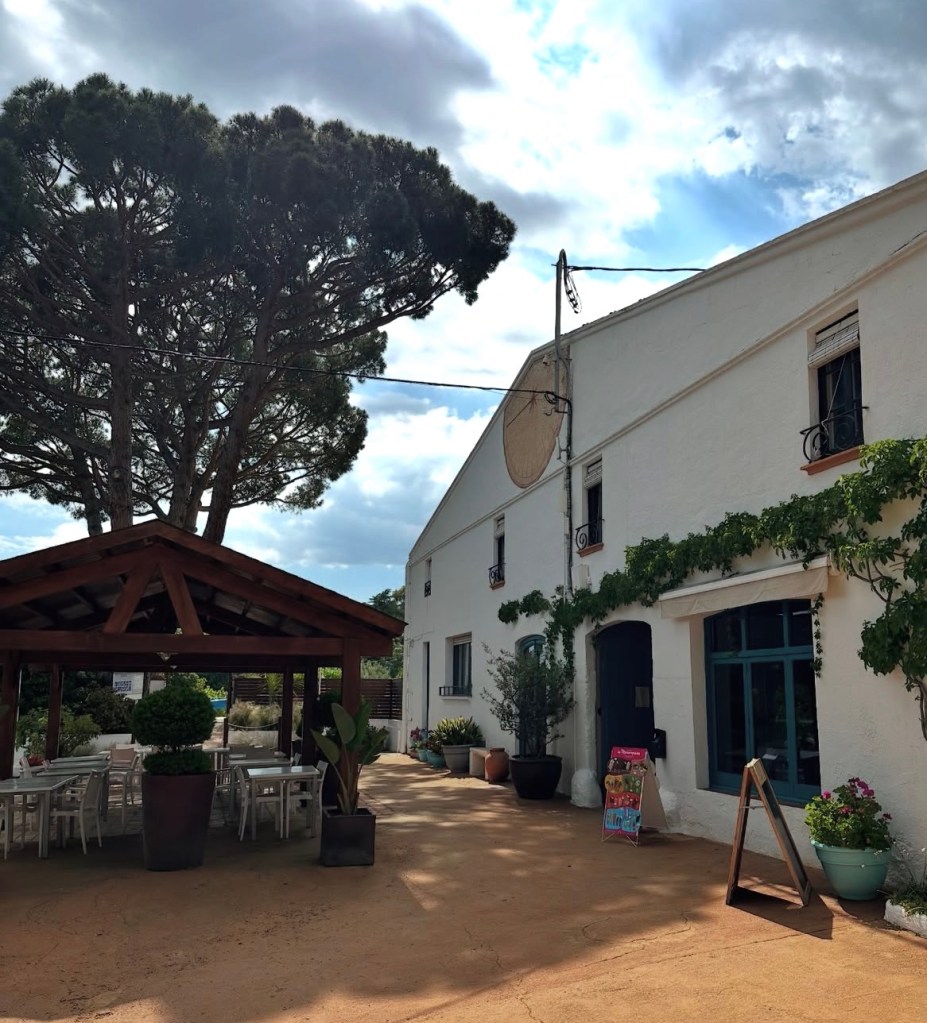
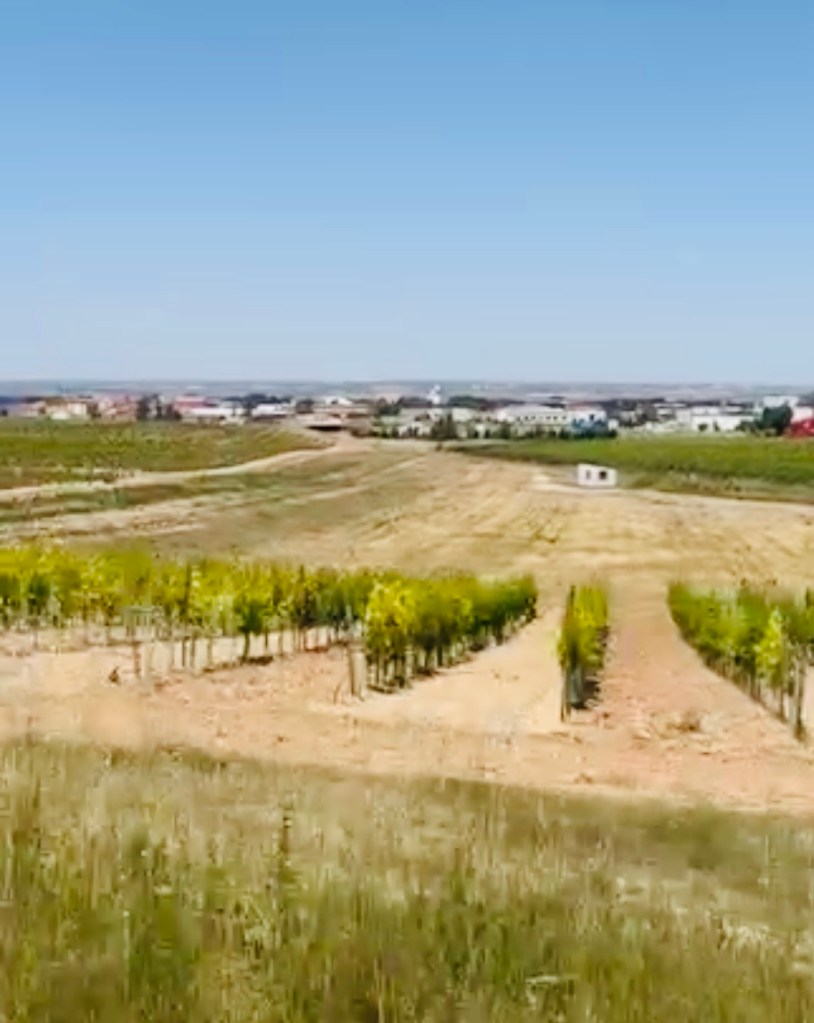
On our return north, we dipped back into Spain via Cabrerizos, passing through the legendary Ribera del Duero wine region and continuing on to Villasur de Herreros — a perfect blend of travel, wine, and countryside.
Trip Highlights
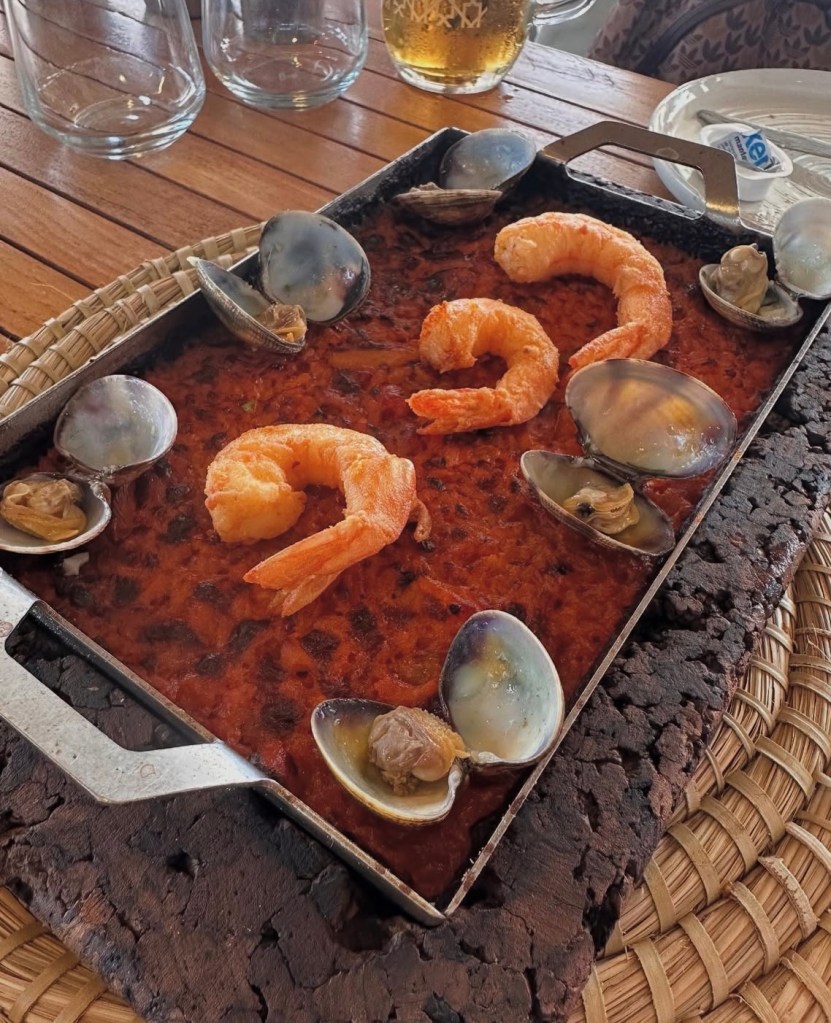
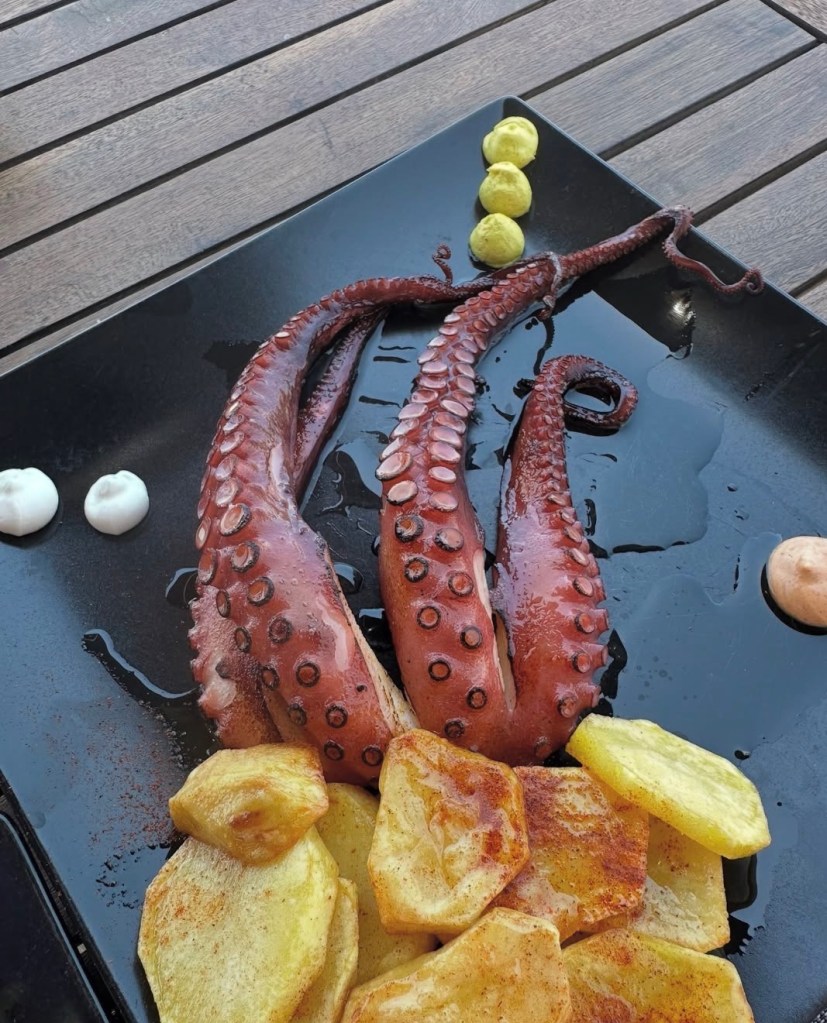
The food! Spanish food deserves its own love letter. From the joy of sharing endless small plates of tapas, to indulgent paellas and the freshest seafood imaginable, this trip was as much a journey for the palate as it was for the soul.
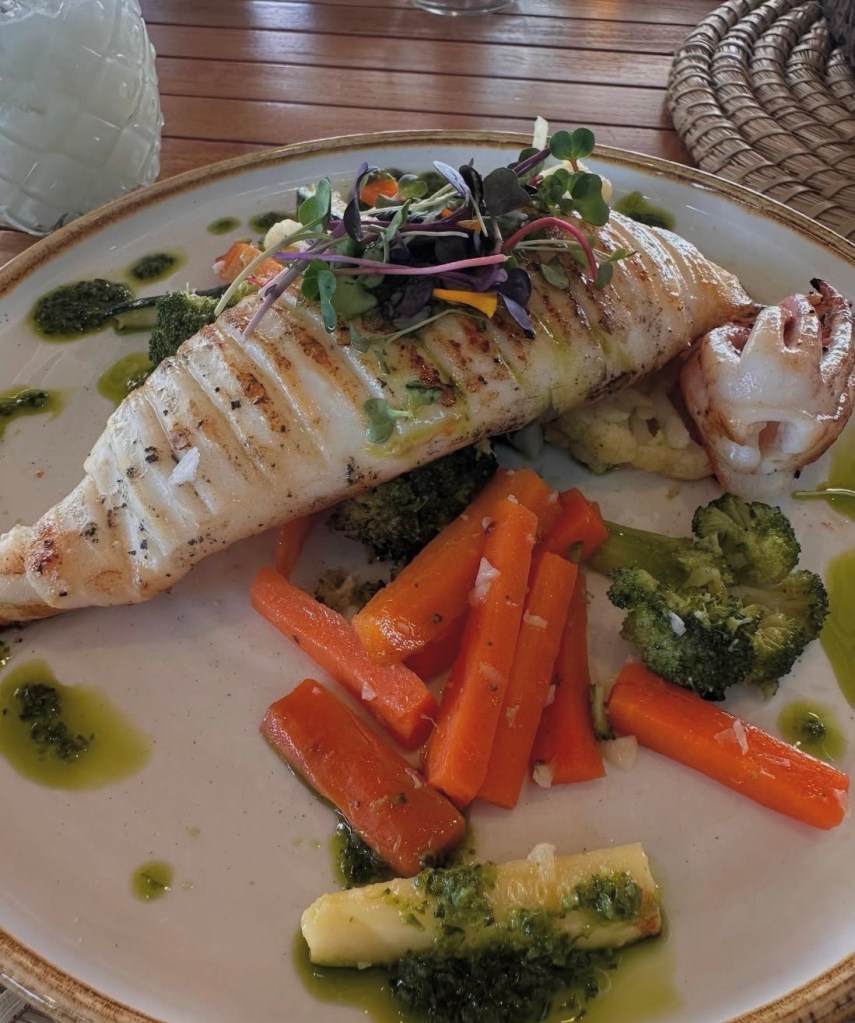
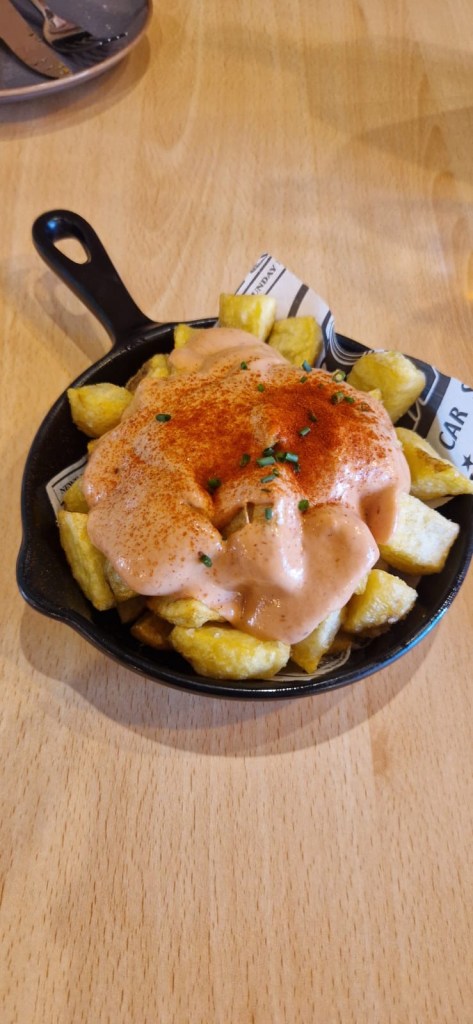
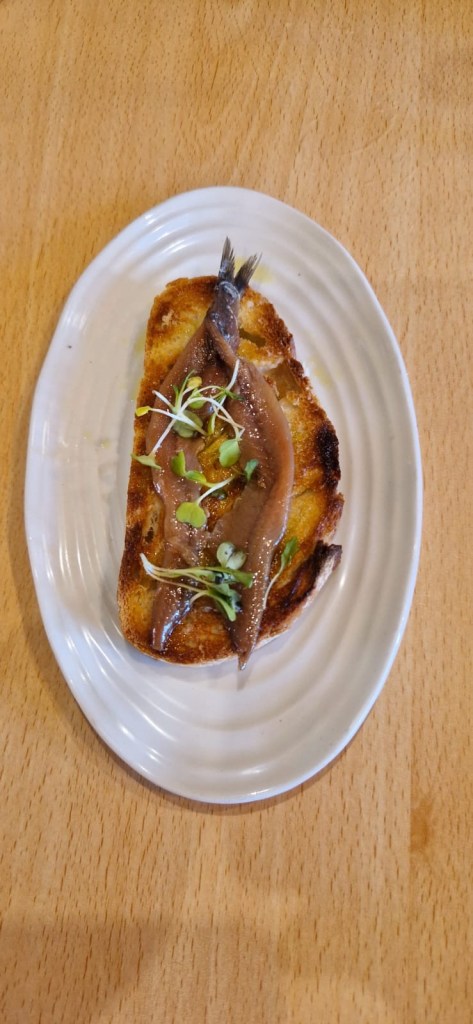
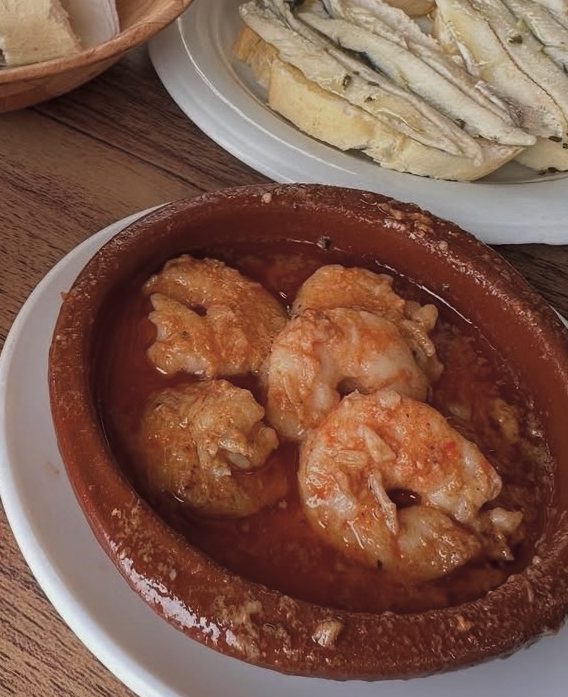
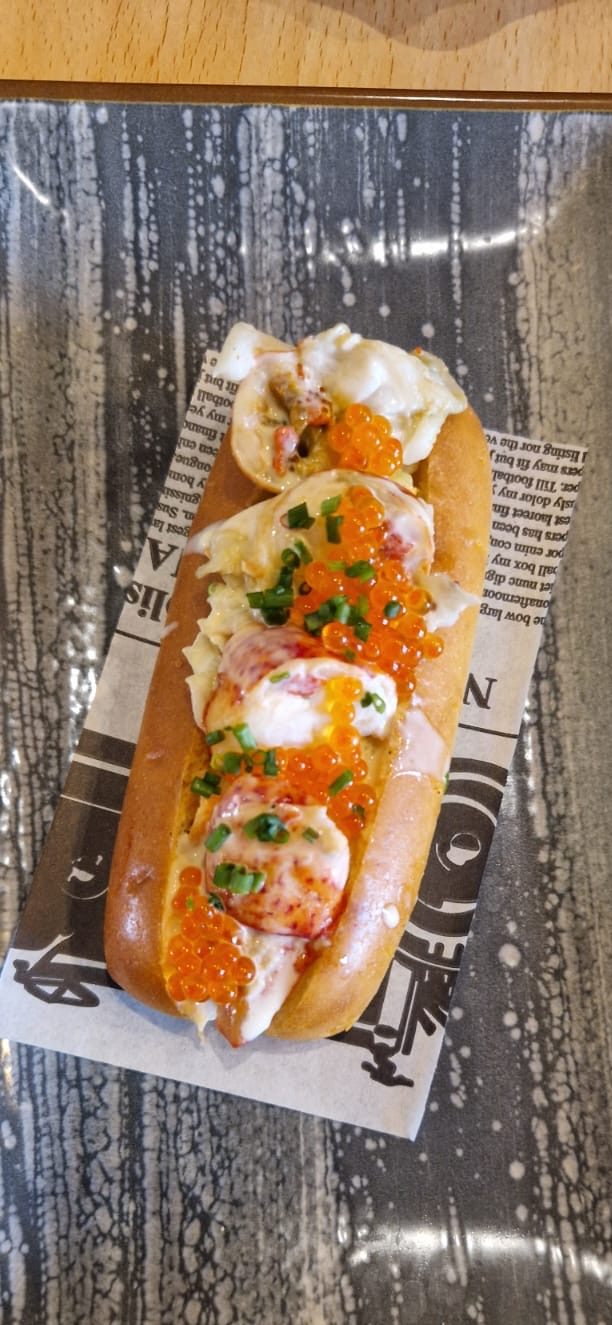
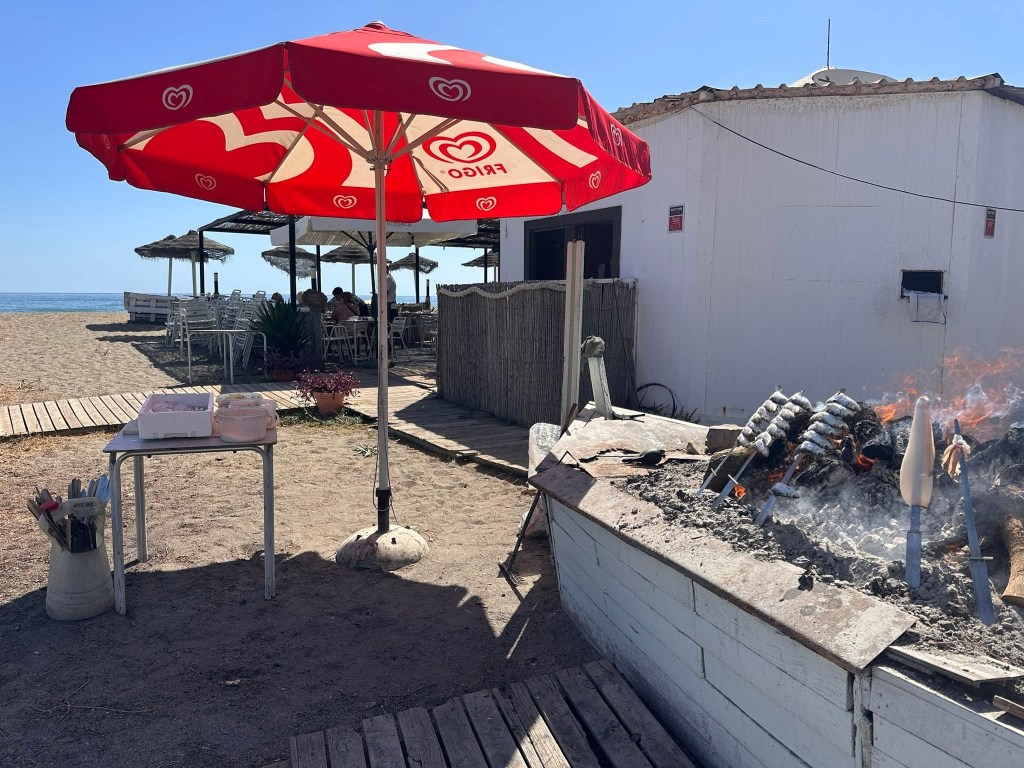
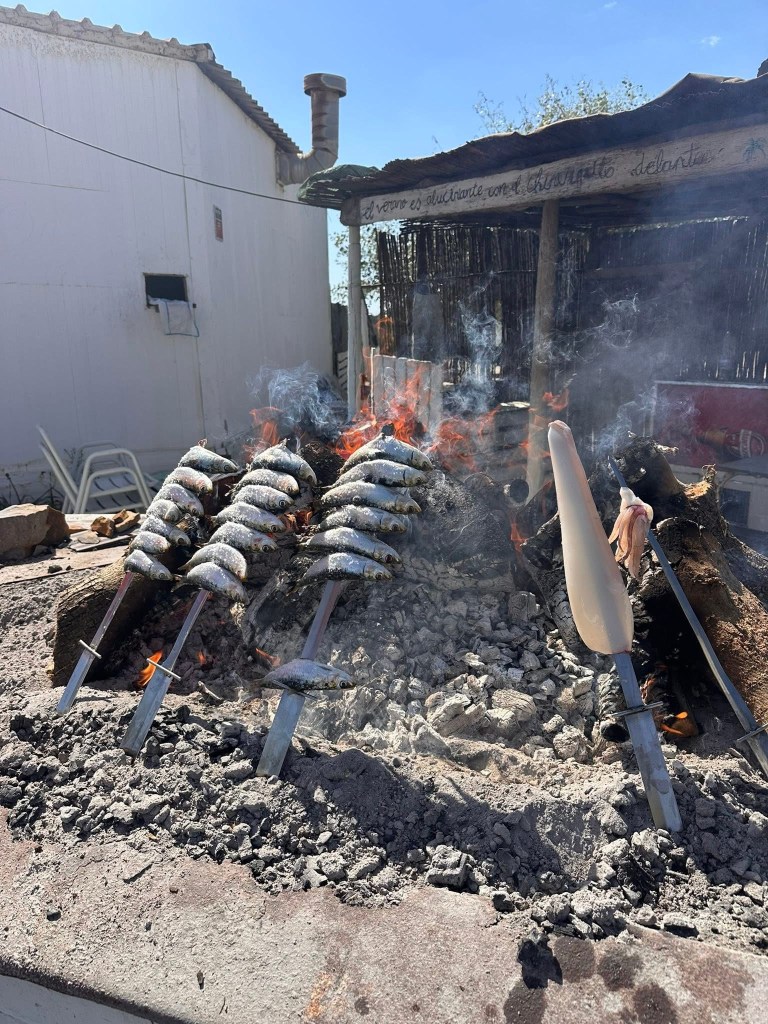
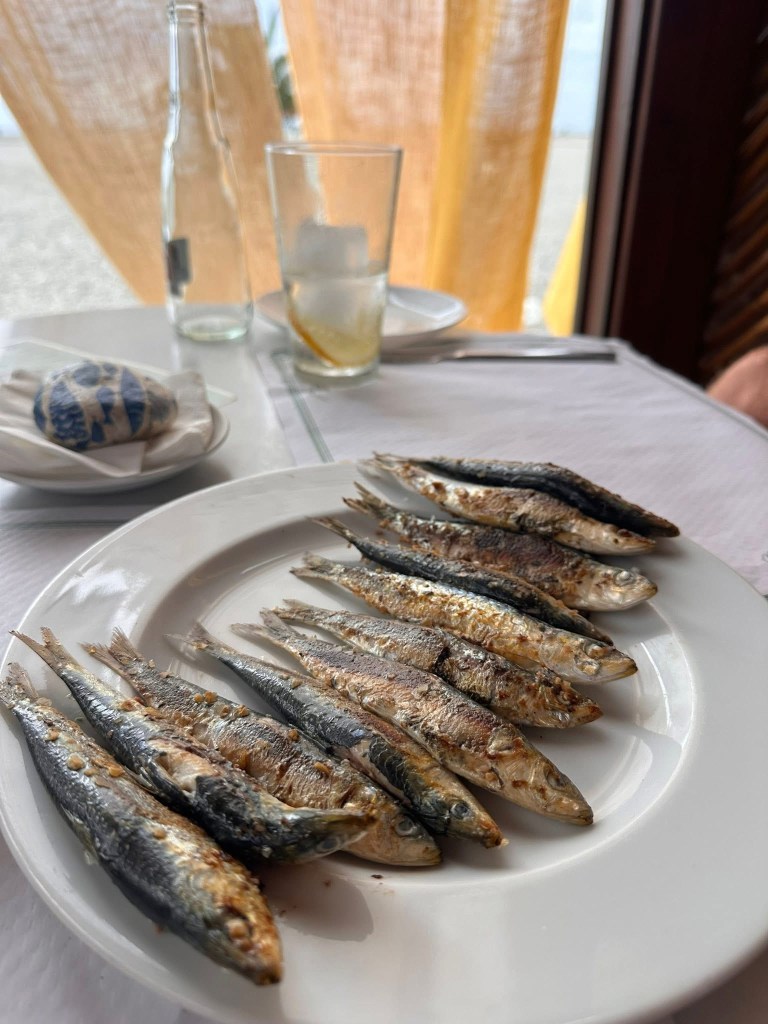
One unforgettable highlight was watching fish cooked over open flames right on the beach. These traditional fire pits – known as espetoneras – often resemble small sand-pit boats and are especially common along the Málaga coast and the Costa del Sol. The dish itself, espetos, usually sardines skewered and grilled over the fire, is simplicity perfected.
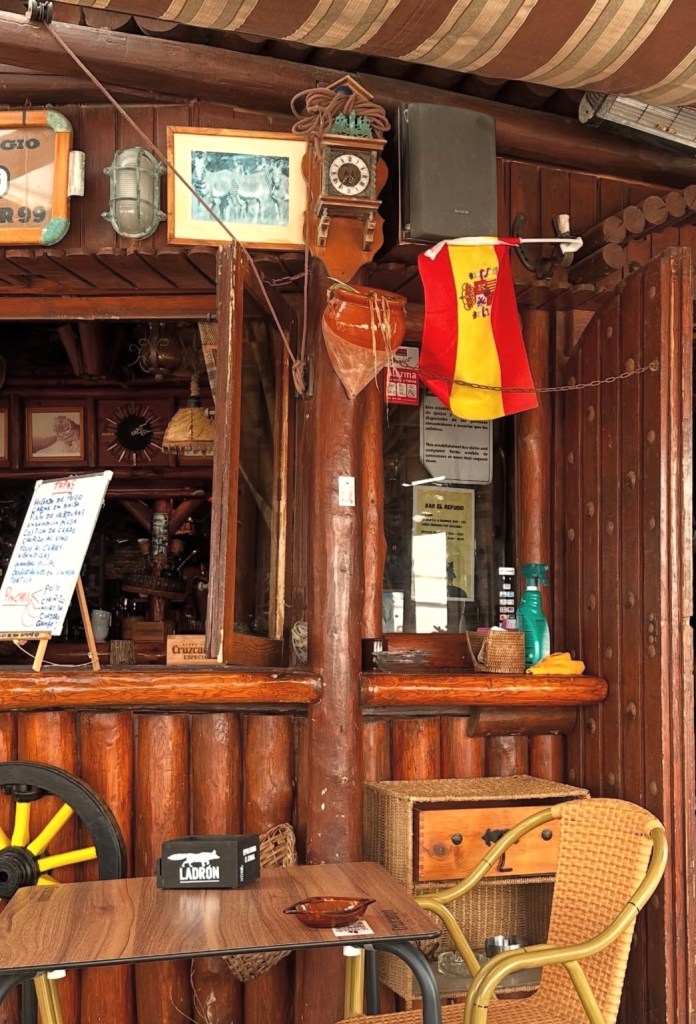
We discovered countless highly rated chiringuitos along the way — classic Spanish beach bars and restaurants set directly on the sand. Some were rustic and no-frills, others modern and stylish, but all shared the same focus: cold drinks, great tapas, fresh seafood, and that unbeatable holiday atmosphere.
And then there’s the ham.
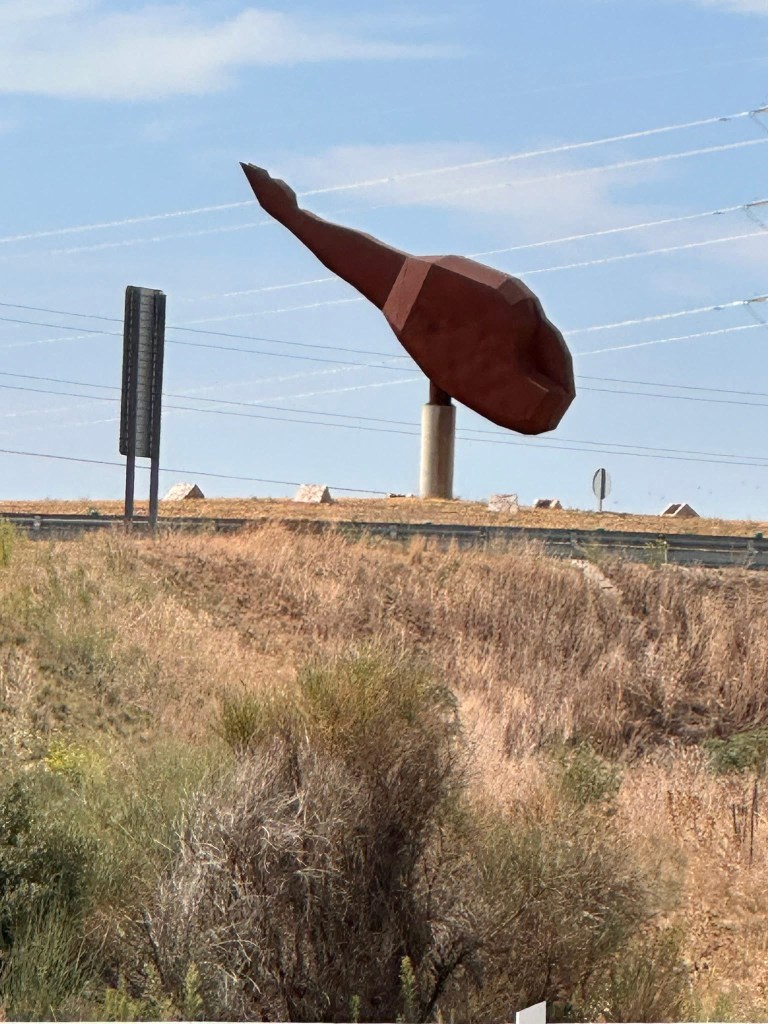
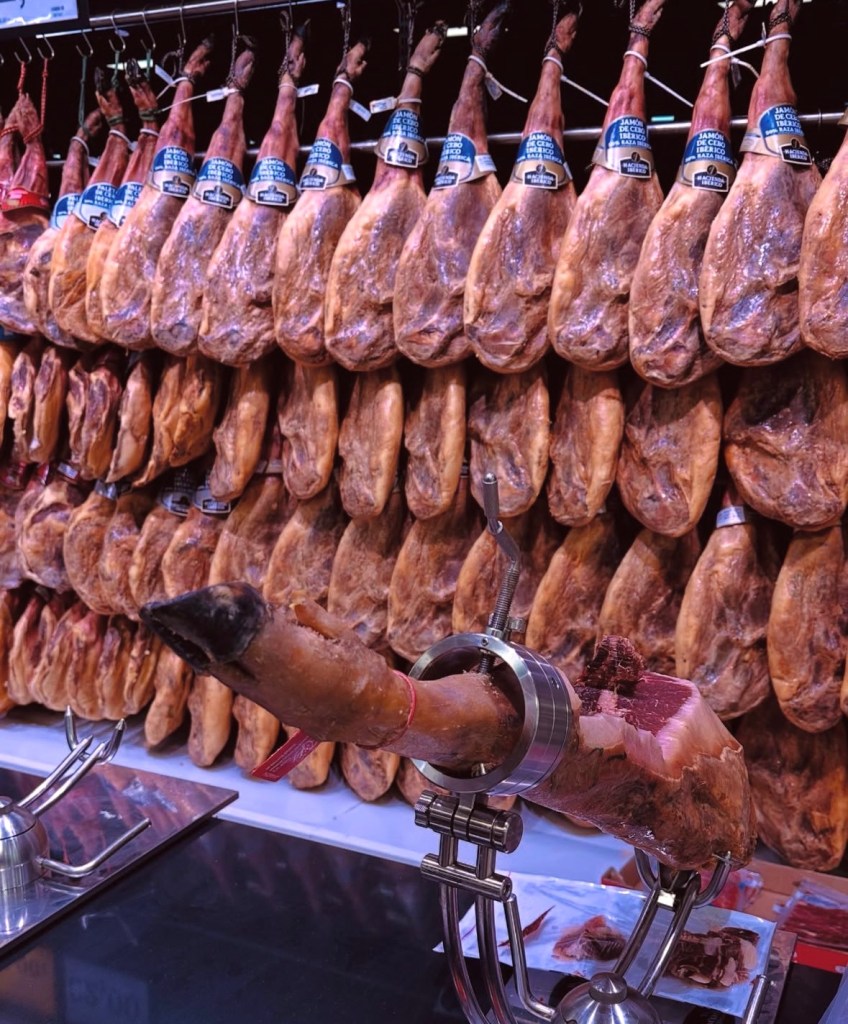
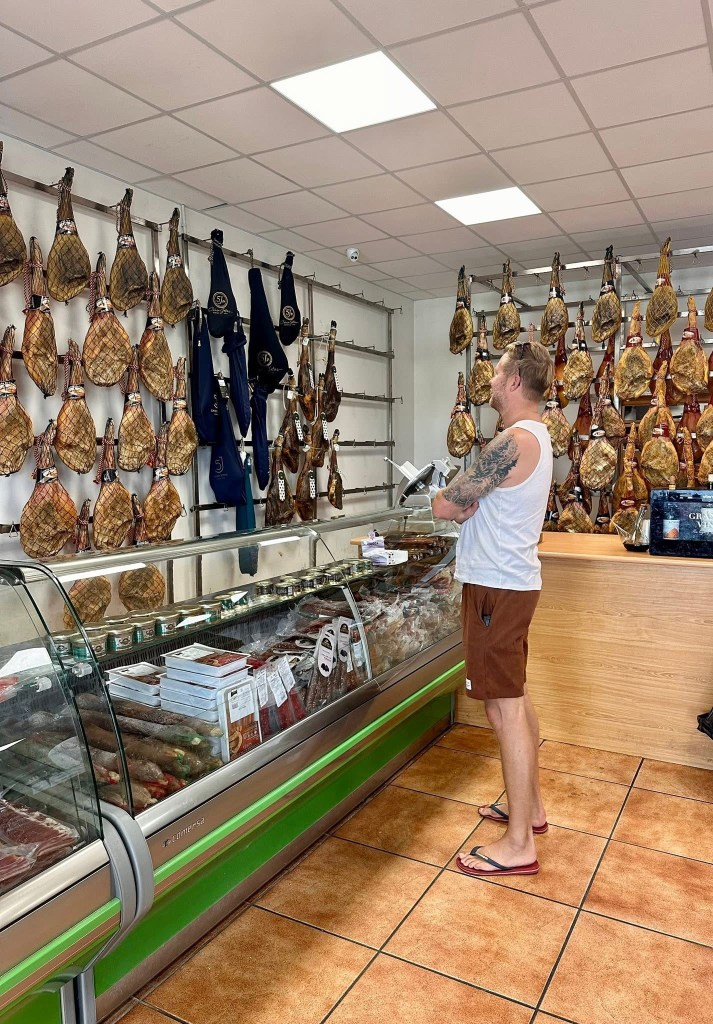
I can’t write about Spanish food without mentioning Jamón Ibérico de Bellota — arguably the finest cured ham in the world. Produced from acorn-fed Iberian pigs (often called Pata Negra), these animals roam freely through oak forests in southwestern Spain. The result? Paper-thin slices that melt like butter on your tongue. Absolute heaven.
Food, Wine & Churros
I’ve covered the food, but Spanish wine deserves its own spotlight – especially Ribera del Duero, home to my favourite red wines.
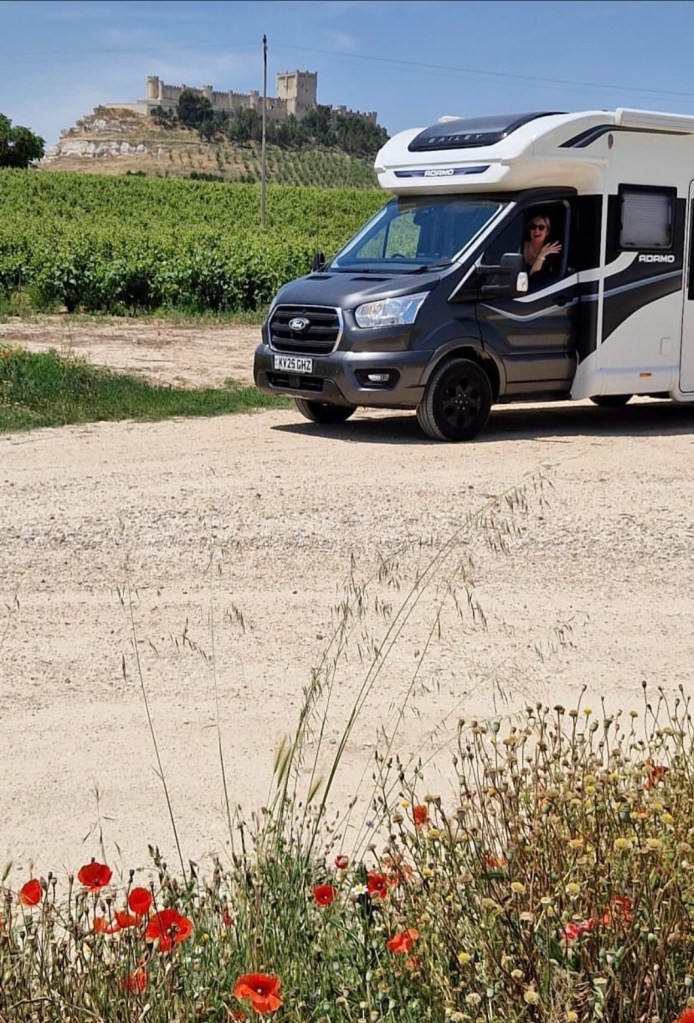
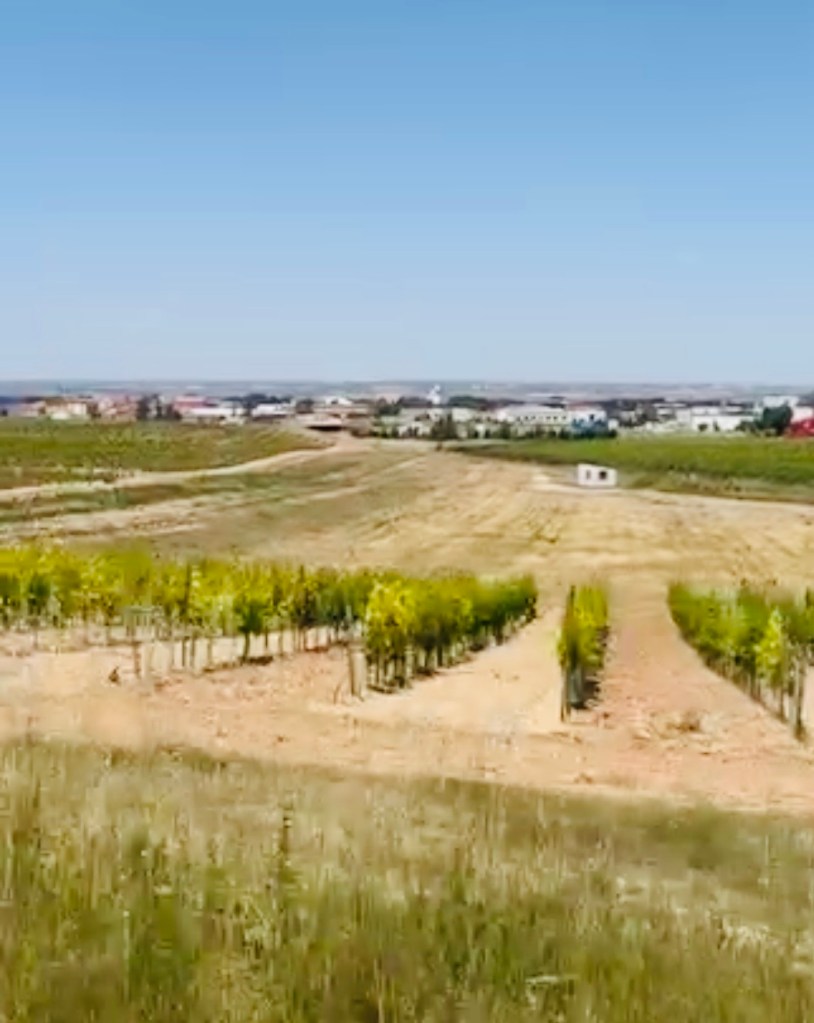
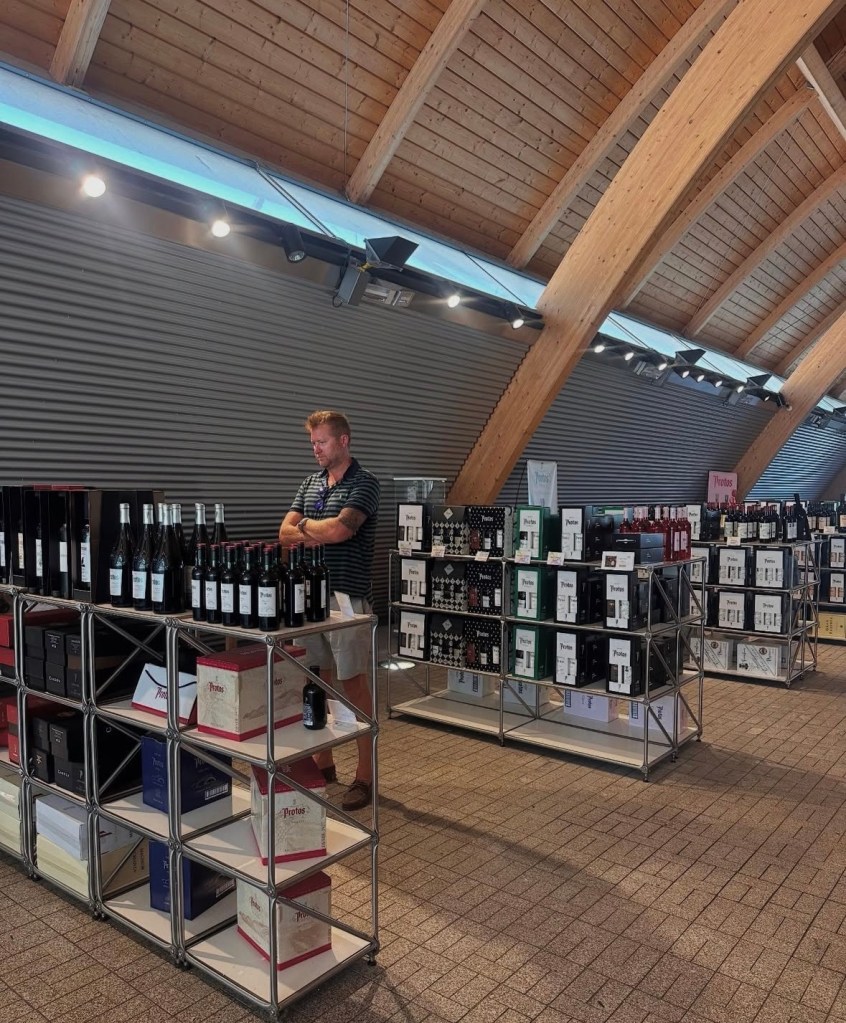
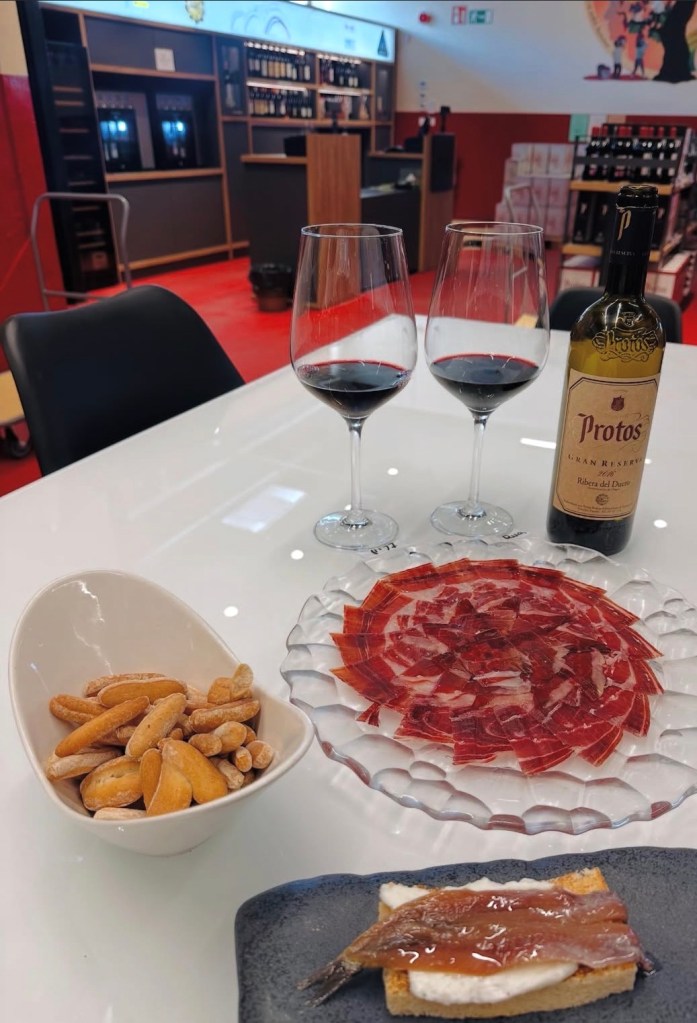
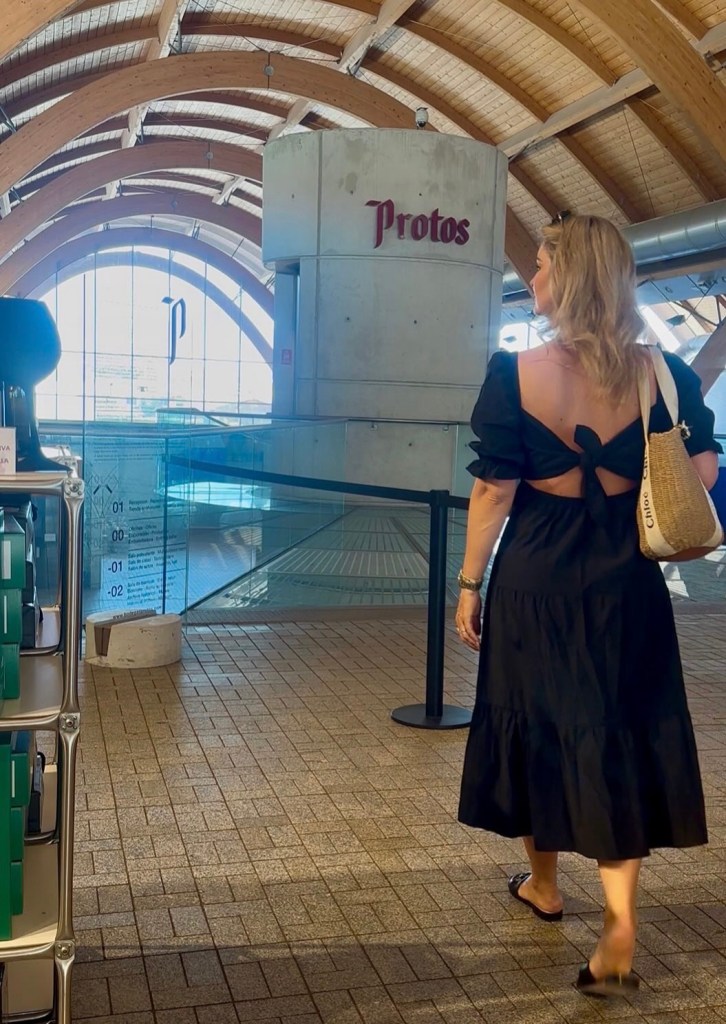
Stopping at Bodegas Protos was a real highlight. Founded in 1927, Protos takes its name from the Greek word for “first” is located in Peñafiel, in the province of Valladolid, the winery sits in a region defined by a Mediterranean climate with strong continental influences: low rainfall, hot dry summers, and long, harsh winters. Dramatic temperature swings between day and night slow the ripening of the grapes, creating wines with depth, structure, and character.
Walking through the winery, seeing the vast steel fermentation tanks, tasting the wines, and (of course) buying a couple of bottles to take away was a fascinating experience – and the perfect way to round off a journey filled with incredible food, unforgettable landscapes, and the freedom that only motorhome travel can give.
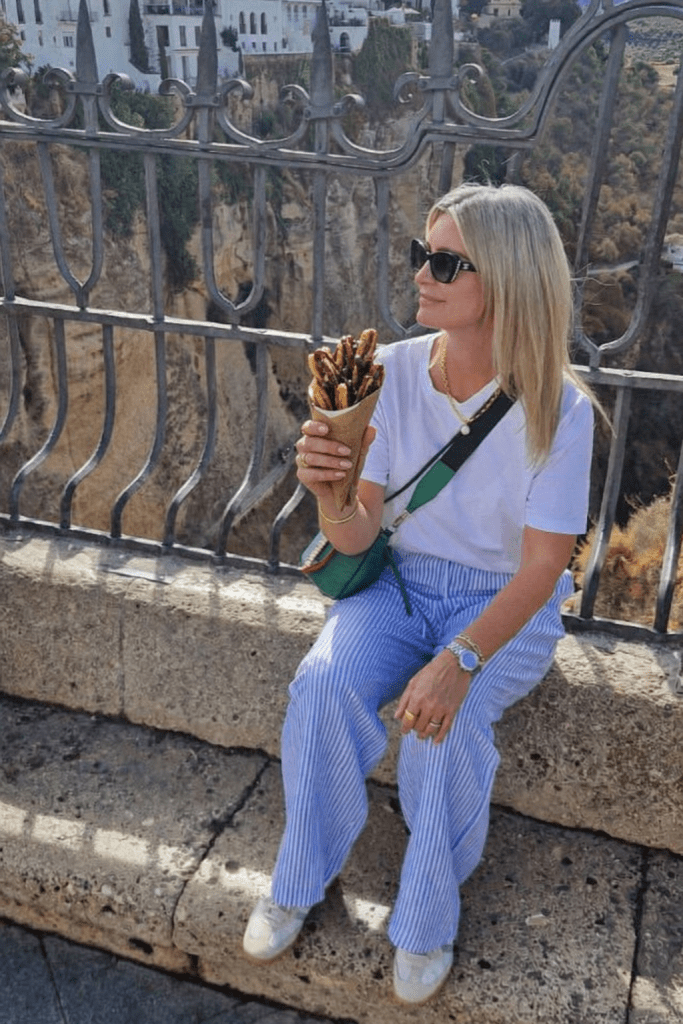
To round up Spain on a sweet note… If there’s one golden rule when it comes to churros in Spain, it’s this: always make sure they’re freshly made. Proper churros should arrive hot, crisp on the outside, and soft and airy inside – never limp, greasy, or reheated. The best places make them to order, often frying them right in front of you, filling the air with that irresistible scent of hot dough and sugar. Pair them with thick, rich hot chocolate and you’ll understand why Spaniards take their churros so seriously – when they’re fresh, they’re nothing short of magical… just like our travels through España.
 The Hive by Melissa
Leave a comment